Kids, I’ve always been a completionist at heart. I’ve never struggled with that. Frankly, there’s little I enjoy more than jumping into a tv show and watching the story shift and develop with each passing episode. I’m nerdy that way.
Until, that is, I started watching Irwin Allen shows.
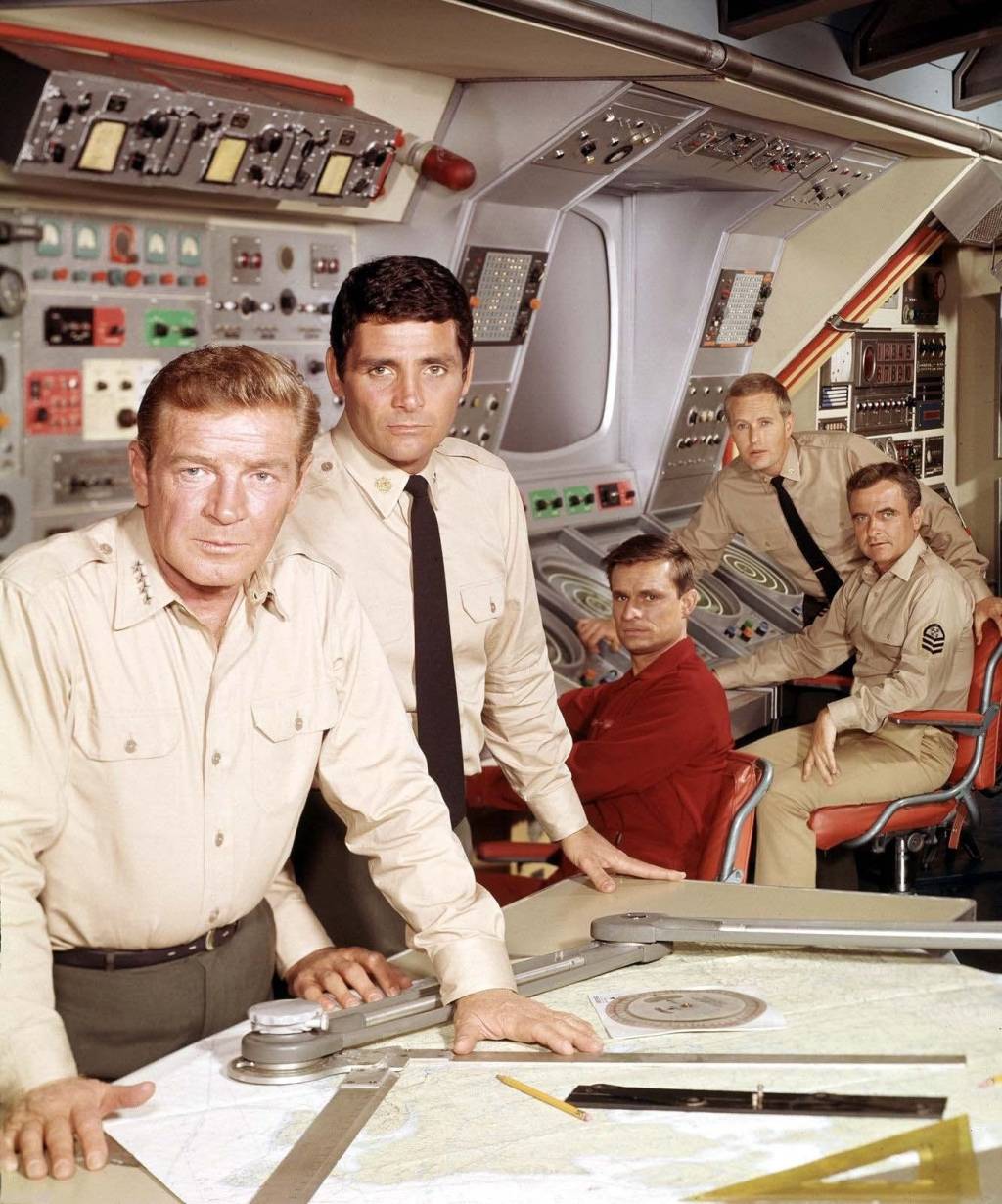
2025 and 2026 have been the year of Irwin Allen in the Pierce household. Specifically, Lost in Space and Voyage to the Bottom of the Sea. I’ve been on a TV kick, a shameless one at that. These shows have been like candy.
For completely unplanned reasons, I jumped into each show beginning with their final seasons. Season three of Lost in Space and season four of Voyage to the Bottom of the Sea. Screw continuity, am I right?
Traditionally, I’ve had certain associations with the final seasons of shows. They’re cancelled for a reason, right? Kids, I’m only human.
Au contraire, dear readers!
My foray into Irwin Allen has completely thrown these associations for a loop. Both shows present final seasons that are their own special kinds of joy.
I’m a Nick and Nite kid! I grew up on classic TV in all its forms, but boy, oh, boy, television of the mid-1960s is its own special brand of wacky.
I personally credit Batman with the change, but I would be failing at my job if I didn’t also give credit (where it’s rightfully due) to The Monkees. Both coming in 1966, things were getting a little looser, a little lighter and the wackiness seemed to ratchet up a level.
Mid-1960s comedies are a completely different breed.
I know, I know. I’m sure there are lines of critics (and people who remember the 1960s) lining up to roll their eyes at me, but hear me out.
My introduction to Lost in Space came thanks to an iconic (or infamous) episode of the series. That’s right, “The Great Vegetable Rebellion”. I am not ashamed. I laughed. I guffawed. I had no idea what I was watching.
The episode is the penultimate entry in the sci-fi series. The hour of television brought me something that is now one of my favorite bits of campy delightfulness, Jonathan Harris bickering with “The Robot”. This doesn’t even include the episode synopsis, which finds the Robinson Family landing on a planet where plants are the highest intelligence.
That’s right! The Robinsons do battle with a giant carrot. Or Stanley Adams clad in a carrot costume to be more precise.
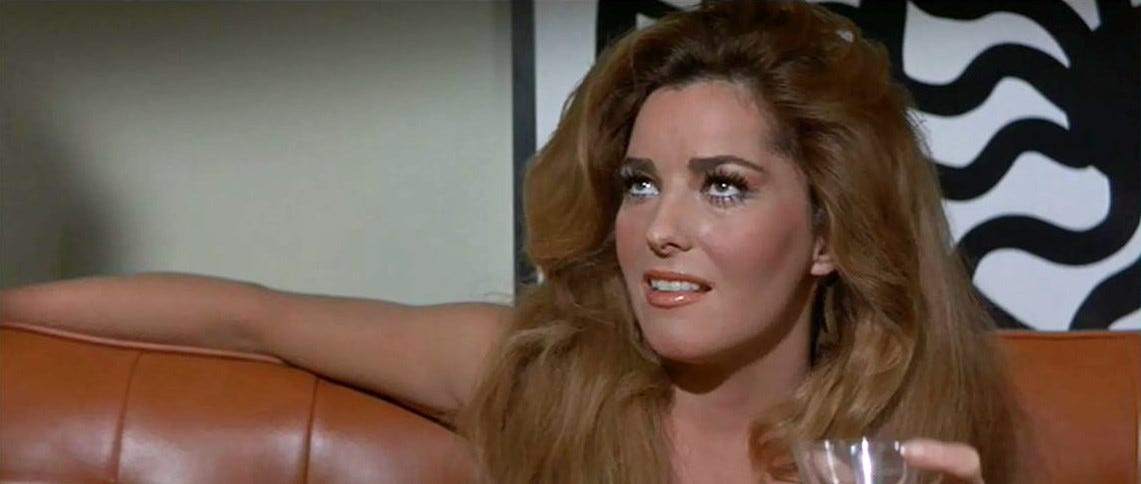
This is just one of a number of episodes during the season that bask in this decidedly wacky tone. In “Two Weeks in Space” Doctor Smith turns the Jupiter 2 into a hotel when everyone else goes off planet. He’s left alone with Will (Billy Mumy) and The Robot. The tone of the episode is solidified when we learn The Robot is the resort’s badminton teacher. Then also there’s a guest appearance by a very young Edy Williams.
These are just two episodes in a season that left me cackling with joy. These hours of television gel seamlessly with the side of my personality that devours drive-in schlock. Remember, there will be no Plan 9 From Outer Space disrespect in this house.
Believe it or not, my introduction to Voyage to the Bottom of the Sea happened much in the same way. Where “The Great Vegetable Rebellion” got me excited to watch Lost in Space, “The Deadly Dolls” did the same thing for Voyage to the Bottom of the Sea.
This episode follows the crew of the Seaview as they’re forced to contend with an evil puppeteer (played by none other than Vincent Price) with aims of taking over the ship by turning the crew into his puppets.
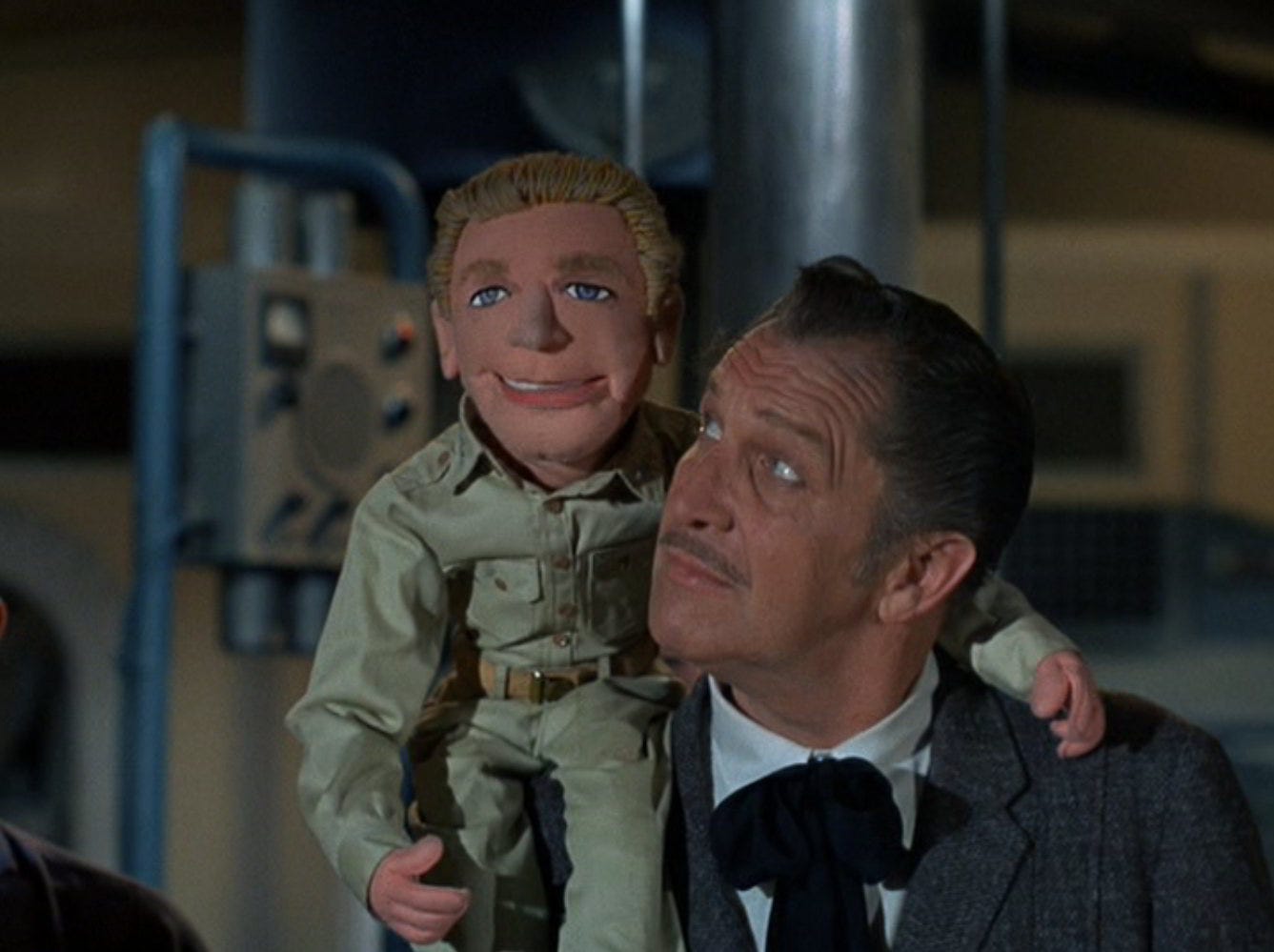
Only Vincent Price could take a story like this and bring his character to life with a devious sense of fun.
With a season that includes battles with an abominable snowman, a “lobster man” and an evil leprechaun, there’s a lot of schlocky fun happening in season 4 of Voyage to the Bottom of the Sea.
That leprechaun episode is… something else.
It still baffles me that both of these series started out as fairly stoic dramas in their early years.
Beginning in 1965 and 1964 respectively, both shows premiered in a different television era. Things were still shot in heavy black and white and there’s a tension. There’s an uneasiness.
Both shows premiered into a world with fresh memories of the Cold War and the Cuban Missile Crisis. Fears of nuclear destruction were fresh in the cultural memory and it’s reflected in both of these science fiction series.
By the time both shows ended in 1968, things had changed. It was a different world. Vietnam and the resulting societal unrest dominated culture. It’s been well documented how much of a dumpster fire 1968 was.
These shows, both of which wrapped their runs in the spring of that year have seemingly changed with the world. They’ve loosened up. In the heady days of 1968, the worries of nuclear annihilation had faded ever-so-slightly and in a world with different, but equally real concerns, there’s an increased focus on entertainment. Sometimes we need to laugh.
In watching these shows, I learned how much I needed to laugh.
I fell down the rabbit hole of these series assuming that the last season is just that. It leads to cancellation. That as a “critic” I should find these episodes somehow “less than”.
The thing is? They aren’t. These campy and sometimes schlocky classics aren’t the death throes of a dying show.
I can honestly say I enjoy the weirdness of these candy-coated hours of tv more than the occasionally tense sci-fi of the early runs. And boy, oh, boy, I’ve had to make peace with that in my own brain.

Leave a comment