Note: Contains discussion of adult/explicit film content.
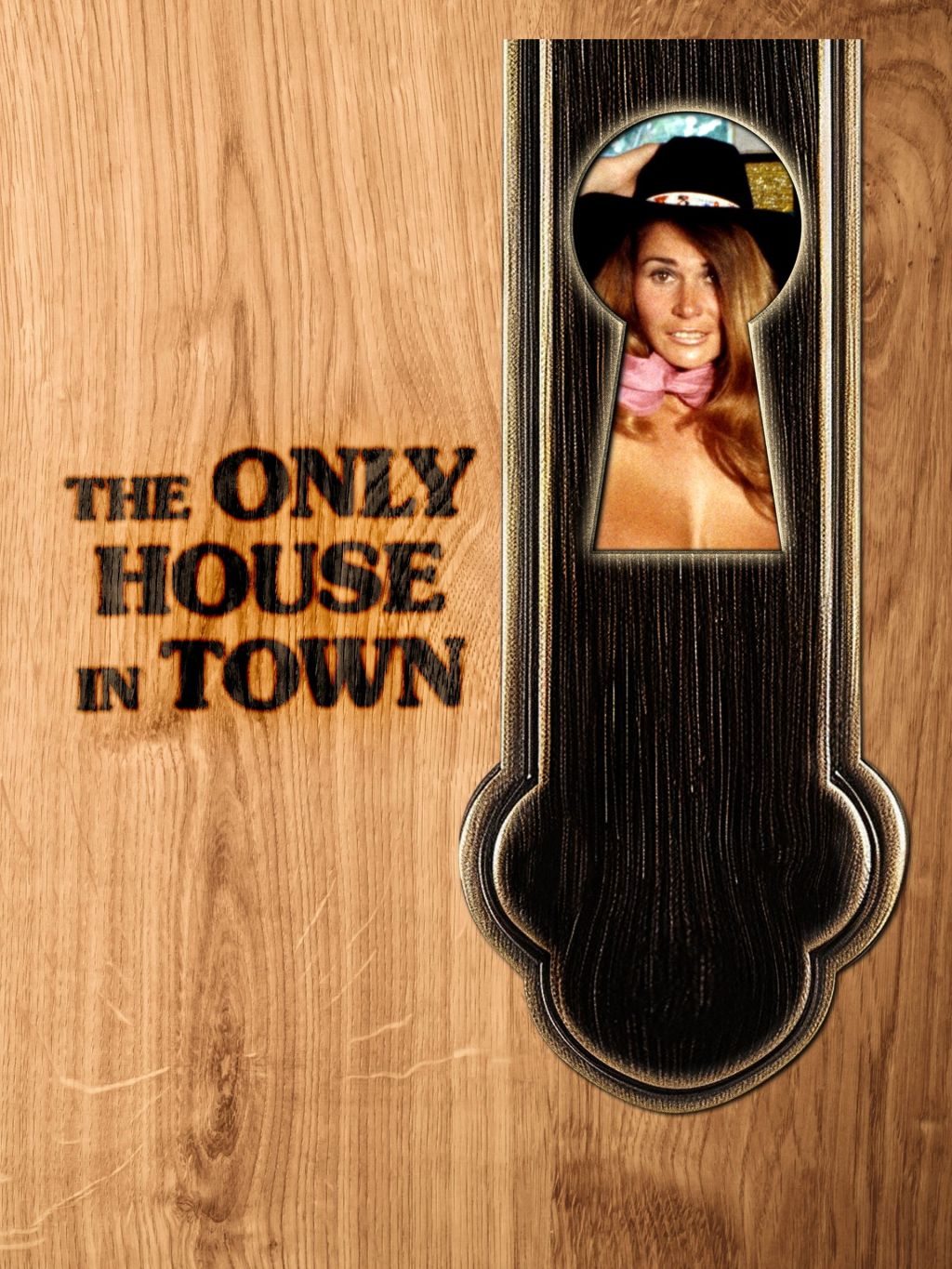
Sometimes a movie comes along that you can’t fathom actually finding on streaming… not mainstream sites anyway. The Only House in Town belongs in a darker, grimier corner of the streaming universe.
The Only House in Town… who are we kidding, this film doesn’t have a plot synopsis. The movie is, essentially, a thinly connected series of explicit vignettes about the action inside a brothel. Uschi Digard and Neola Graef star in the film while Ed Wood receives credit as the film’s director. Yes, that Ed Wood, more than 10 years after the oft-discussed Plan 9 From Outer Space.
Let this be your reminder: there will be NO Plan 9 slander in this house.
Enough of that. Let’s get back to the strange, grimy relic that is The Only House in Town. Kids, if you haven’t figured it out already, this is a dusty, deep-cut, “adult” movie. To make matters more… seedy… the budget couldn’t get any lower. If you listen really closely, you can hear someone (whom many guess is Wood) giving the performers directions from off-screen throughout the film.
Did I find a porno on Prime Video?
When I found exactly how tightly The Only House in Town walked the softcore/hardcore line, I sprinted to the Letterboxd reviews. I was compelled. Perhaps unsurprisingly, they range from 20 “half-star” reviews to 9 “five-star” reviews of this supposedly “soft-core” picture.
Kids, if this is “softcore”, it’s right on the border.
As mentioned, the film is a thin collection of scenes ranging from group orgies to scenes of challenging and disturbing violence. In fact, in a look through Letterboxd analysis, the opening scene is often described as “Mansonesque”. It’s not for the faint of heart.
Much of the work is shot in long takes, while the camera rarely cuts. Through this lens, the audience sits with all the rough edges. We see the moments where the performances slip with all the humor and confusion. It’s a gritty and uncomfortable experience, but there’s a lot of humanity here. The simplest moments are sometimes the most captivating.
The Only House in Town is one of three Uschi Digard films that made up my March. Before this, though, despite having watched 1973’s Superchick, I was (shamefully!) ignorant of her work.
Digard holds down the fort in The Only House in Town as, essentially, the film’s narrator and the manager of “The Only House in Town.” She plays a role in a number of the film’s vignettes, and even in this blurry print, she paints a fascinating picture. I had to learn more about this woman.
A look through Uschi Digard’s newspaper coverage during the 1970s and 1980s tells a hazy story of a complicated woman. The articles tell fascinating tales of a childhood spent in European boarding schools and skiing in Switzerland before joining the adult film industry. In some pieces, she’s said to have been born in Bismark North Dakota. However, an April 25, 1975, article in the Birmingham Post-Herald proclaims her a “Swedish beauty”.
Perhaps most interesting are several articles connecting Digard to filmmaker Russ Meyer. A November 21, 1976, article in the Lexington Herald-Ledger, entitled “Blue Movies Defended,” bills Digard as an “X-Rated Actress, Producer”. IMDb, meanwhile, bills Digard as an associate producer on Up, Meyer’s 1976 release. She’s billed as a producer on three more of his films: Beneath the Valley of the Ultra-Vixens in 1979 and Can I Do It… Till I Need Glasses in 1977.
Looking through Digard’s period press clippings, it’s hard to get a full picture beyond her on-screen persona. Her story is manufactured. Her name, even, is an alias. Despite some hints towards the woman behind the facade, the language of the period can’t help but leak through… in often frustrating ways. The Lexington Herald-Ledger, specifically, describes Digard as “a rather overdeveloped young lady, an anatomical wonder of questionable origins”.
The Rialto Report podcast interviewed Digard in 2022, and they discussed her production work behind the camera. Digard says, “It’s doing everything from casting to getting the wardrobe together, to getting the props, to make sure there was continuity between each shot.”
She goes on to talk about getting the opportunity to direct “sensual scenes” while working with Russ Meyer. She says, “He (Meyer) was a little bit too much of a bull in a china shop, and things could be (done) a little more delicately….”
A November 14, 1976, Evansville Courier and Press article quotes Digard, “I enjoyed being a producer, because it’s more challenging and exciting…. I like learning every facet of filmmaking.”
My admittedly early work with Digard left me wanting more. Her story is one of complexity, certainly, but also quiet power in an unconventional industry. She talks about not only directing scenes, but also learning filmmaking from one of the industry’s most infamous directors. This is a fascinating tale, and I can’t wait to dig deeper.
When all is said and done, The Only House in Town is a strange beast. At the same time, though, the movie blew me away with its humanity. Whether it was Digard stealing the movie like a bandit or the performers letting their personalities show through thanks to the often clumsy direction, it left me curious about the people behind the paper-thin plot.
Who are they? What are their stories? What was going on behind the scenes in this dusty, grimy, and often unpleasant exploitation film? That’s what we’re trying to do here at Piercing Pop Culture: shine a light on the people, not simply the stars.

Leave a comment