Introduction
The early 1960s are known for being a tremendously destabilizing force in United States culture. In just a few short years, the assassination of JFK, the onset of the civil rights movement, and the arrival of the British Invasion saw the cultural, political, and social revolution finally come to a boil which had been percolating since the end of World War II.
The transition picking up speed in the 1960s fueled a perfect storm spurred on by not only the war’s end but also the coming of age of the initial wave of baby boomers.
In 1960, the earliest baby boomers were entering their teen years and millions were coming behind them. Popular culture lists the ‘baby boom’ as we know it today as beginning in 1945 and lasting just after 1960. There is, of course, some leeway with many of these generational definitions.
When combining this tidal wave of children coming of age with Madison Avenue’s burgeoning advertising industry, there was a growing appreciation for the so-called teenage demographic. The word teenager itself was popularized during this period and suddenly they were a purchasing force in a way they hadn’t been in previous decades. Music was marketed straight to them. Television emerged that was geared to this age. The world was their metaphorical oyster.
The reality of being a teenager is, of course, not a new one, just the mainstream appreciation of their power. 20 years before, there was a lot of talk about “the Bobby Soxers” and their love for Frank Sinatra in the 1940s.
The YouTube clip above from History Comes to Life shows just a snapshot of the maina surrounding Sinatra in the 1940s. Next to Elvis in the 1950s, it is one of the closest things culture in the United States saw to “Beatlemania” just a a decade after. It was a great time to be a teenager.
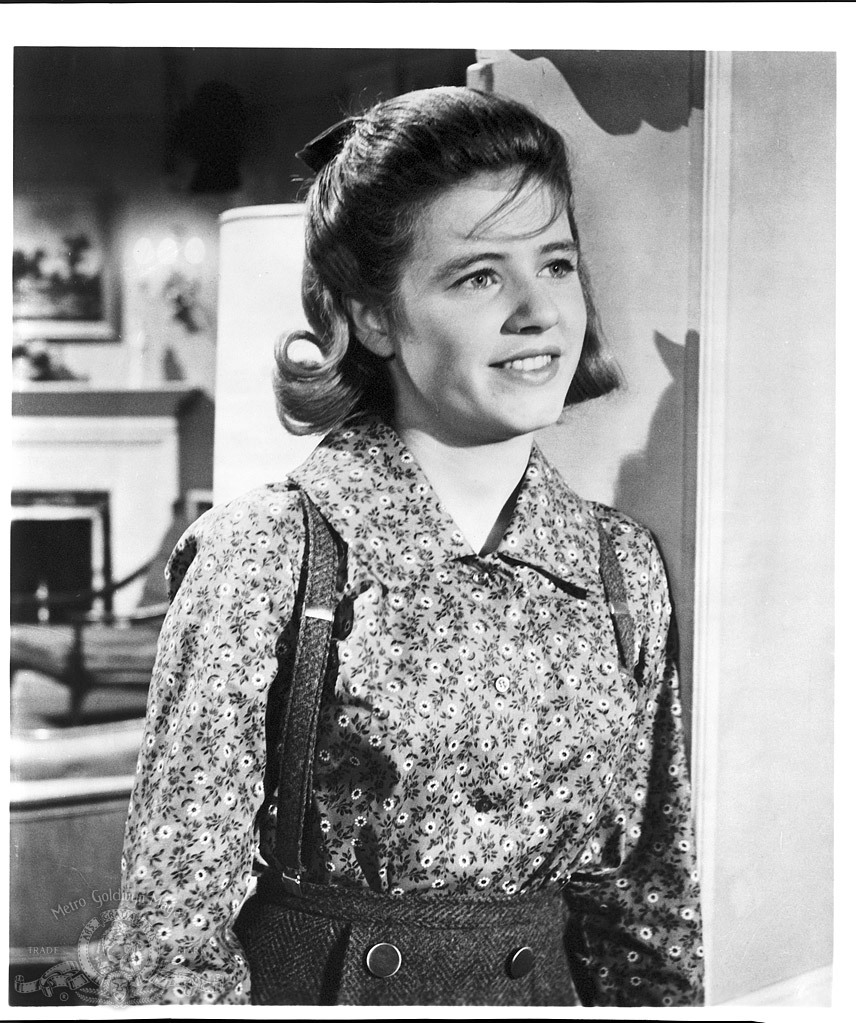
Patty Duke

The Patty Duke Show debuted on ABC in 1963, feeling like a timely one in the U.S. culture of the period. The show spotlighted a targeted eye on teenage life, albeit a sanitized one. Throughout the show’s three-season run, the sitcom showcased a positive portrayal of teenagers and demonstrated a clear integration of the evolving popular culture of the early 1960s.
Any discussion of The Patty Duke Show however, must start with a discussion of the actress herself.
1963 saw Patty Duke as a young actress riding an incredible high as the teenager take home the Best Supporting Actress Academy Award for playing Helen Keller in The Miracle Worker. Even more than 60 years later, only a handful actors in that age group have been recognized for their performances.
The category was a tough one. Duke was nominated opposite not only Thelma Ritter for Birdman of Alcatraz, but Angela Lansbury for The Manchurian Candidate, Shirley Knight for Sweet Bird of Youth, and Mary Badham for To Kill a Mockingbird. Interestingly, sources from the period report that this was the first year that two youngsters (Badham was ten years old while Duke was 16) were nominated in the same year.
Duke came to The Miracle Worker from Broadway where she originated the role of Helen Keller in 1959. The young actress received raves for her work in the play.
An article dated the 29th of November 1959 in the New York Daily News writes:
It was a busy week for the moppet… she gave her usual eight performances in “The Miracle Worker”. She finished taping a new production of One Red Rose co-starring with Helen Hayes…. In addition she posed for a magazine cover, studied for a new television show and still found time for skating at Rockefeller Plaza and shopping at her favorite five and dime store.
Duke remained with The Miracle Worker through its closing in July 1961 when — along with co-lead Ann Bancroft– she went into production on the feature film. Duke also took on a role in a play entitled Isle of Children, but the show ran for less than a month.
After her tenure on The Patty Duke Show, Duke continued working on screen, waging the ongoing battle personal to many teen stars in this industry, the fight to be taken seriously. Many remember her for her work in the culturally complicated Valley of the Dolls in 1967, based on the novel of the same name.
Later in her career, Duke became a strong mental health advocate after being diagnosed with bipolar disorder while working on the single-season sitcom, It Takes Two.
It was shortly after this that Duke penned her autobiography discussing the extreme sexual, physical, and emotional abuse she suffered at the hands of her managers during her childhood. Through all this tribulation though, Duke continued acting and even served as the President of the Screen Actors Guild in 1985. She was only the second woman to hold the post after Kathleen Nolan was elected in 1975.
We lost Patty Duke in 2016. Through everything, Patty Duke was a fighter, plain and simple. She faced struggle, hardship, and adversity throughout her career, but she continued to fight. In her tenacity, she remains a pillar of strength.
The Patty Duke Show Background

The Patty Duke Show was the brainchild of writer Sidney Sheldon, best known as a treasure of American television. Sheldon created a number of popular sitcoms, including: The Patty Duke Show, I Dream of Jeannie, and Hart to Hart. However, a deep look at his filmography shows the writer with script credit on legendary feature film classics like The Bachelor and the Bobby Soxer, Easter Parade, and Annie Get Your Gun.
It was reportedly Sheldon who came up with the unconventional premise of The Patty Duke Show. Identical cousins. It’s the kind of kooky only an innocent 1960s sitcom can pull off with a straight face. Sheldon is said to have come up with the conceit after spending time with the young actress. He said she had two district parts of her personality… Hence Patty and Cathy Lane.
The Patty Duke Show ran for 3 seasons on ABC. Schedules of the period have it early on Wednesday night with the long-running favorite The Adventures of Ozzie and Harriet as its lead-in. Meanwhile, NBC ran the popular western series The Virginian. Poor CBS, however, saw a line-up that morphed a little every year. In 1963, they started with CBS Reports, but by 1965 Lost in Space held the time slot.
Initial reviews of The Patty Duke Show were not favorable, especially right after the show’s September 18, 1963 premiere. A nationally syndicated review by columnist Cynthia Lowry, reports that the show may not win Duke “any performing awards”, but states it “may amuse teenagers”.
From the beginning, the draw is most certainly teenagers, not the critics. Newspaper coverage throughout the run of The Patty Duke Show publicity markets the show straight to teenagers with everything from fashion designs carrying Duke’s name, to appearances on Shindig to showcase her music career. This was the early 1960s after all, every teenager had to release a light rock and roll single. Ricky Nelson was still on the air after all.
While Patty Duke did the brunt of the narrative lifting as both Patty and Cathy Lane, a versatile group of performers backed up the talented actress.
William Schallert

William Schallert also played recurring dual roles as brothers (and Patty and Cathy’s respective fathers) Martin and Kenneth Lane. If you don’t know his name, Schallert’s face might be familiar to many. The actor is a Hollywood journeyman character actor of the absolute highest order. Schallert’s earliest credits come in the late 1940s and early 1950s with uncredited roles in movies like Mighty Joe Young, The Red Badge of Courage as well as my personal favorite, Singin’ in the Rain.
The son of LA Times cultural critic Edwin Schallert, Schallert the younger worked steadily right out of the gate, his stock increasing with each passing year. Unfortunately, though, his roles never seem to move passed supporting status. He receives billing in moves like Written on the Wind, The Incredible Shrinking Man and The High and the Mighty. It as at this time though that television was gearing up and Schallert had little trouble finding regular work on the small screen.
According to his 2016 Los Angeles Times obituary, Schallert was also elected the President of the Screen Actors Guild in 1979, six years before Duke was elected. This era was a turbulent one in the history of the Screen Actors Guild, a lot of change was happening.
The Los Angeles Times writes that a little over a year into his term, Schallert led the Guild through a 13-week strike over the increasing discrepancy over residuals in the ever-changing TV landscape. During Schallert’s time, he also presided over the foundation of needed committees for under-represented voices in the Guild.
Schallert continued acting throughout the rest of his life, his last credit came in a 2014 episode of Two Broke Girls.
William Schallert passed away in 2016 at the age of 93.
Jean Byron

Actress Jean Byron stepped into the role of Patty’s well-meaning mother, Natalie Lane. Byron’s earliest screen work came in the early 1950s, delightful sounding B-movies The Voodoo Tiger, The Magnetic Monster, and Serpent of the Nile.
Byron gained much of her substantive screen experience through the television of the era. She had a recurring role in the Jean Holloway-created sitcom Mayor of the Town starring Kathleen Freeman and Thomas Mitchell. Her biggest role came in 1959 when she joined the cast of The Many Loves of Dobie Gillis as Dr. Imogene Burkhart, one of the titular character’s college professors. She recurred regularly throughout the show’s third and fourth seasons.
After her run on The Patty Duke Show ended, Byron worked steadily on television, usually in single-episode arcs on shows like Columbo, Ironside, Mod Squad, and Happy Days.
Byron’s final screen credit came on The Patty Duke Show: Still Rockin’ in Brooklyn Heights in 1999.
Byron passed away in 2006 at the age of 80.
Paul O’Keefe
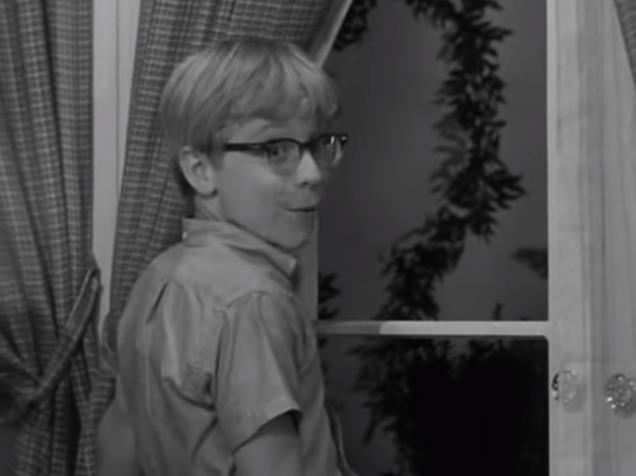
Meanwhile, eleven-year-old Paul O’Keefe jumped into the role of Ross Lane, Patty’s younger brother.
Like Duke, O’Keefe was also a Broadway veteran when he came to The Patty Duke Show. The young actor was cast in several classic musicals of the era. He played the role of Winthrop Paroo in The Music Man before stepping into the role of Oliver Twist in Oliver before joining The Patty Duke Show cast.
Like Duke, he earned a number of television credits at a young age while he was on stage. In the earliest days of television, a sizable number of productions were based out of New York.
O’Keefe continued working after The Patty Duke Show came to an end, but largely stepped away from the industry. An article dated January 20 1980 in the Ashbury Park Press fills in some of the background of O’Keefe’s life since the end of The Patty Duke Show, or after he hit “old age” as the article coldly describes it. O’Keefe says,
I finished college… with an economics major at Columbia because I wanted to have something to fall back on. I also kept up with my music… I know what it’s like balancing several careers from doing music gigs and plays simultaneously… It’s all working out better than ever
O’Keefe’s last screen credit was also the Patty Duke 1999 reunion movie. A 2019 article on Metro had O’Keefe working as the assistant musical director on the 20th-anniversary tour of Rent.
O’Keefe is still with us today at the age of 74.
Eddie Applegate
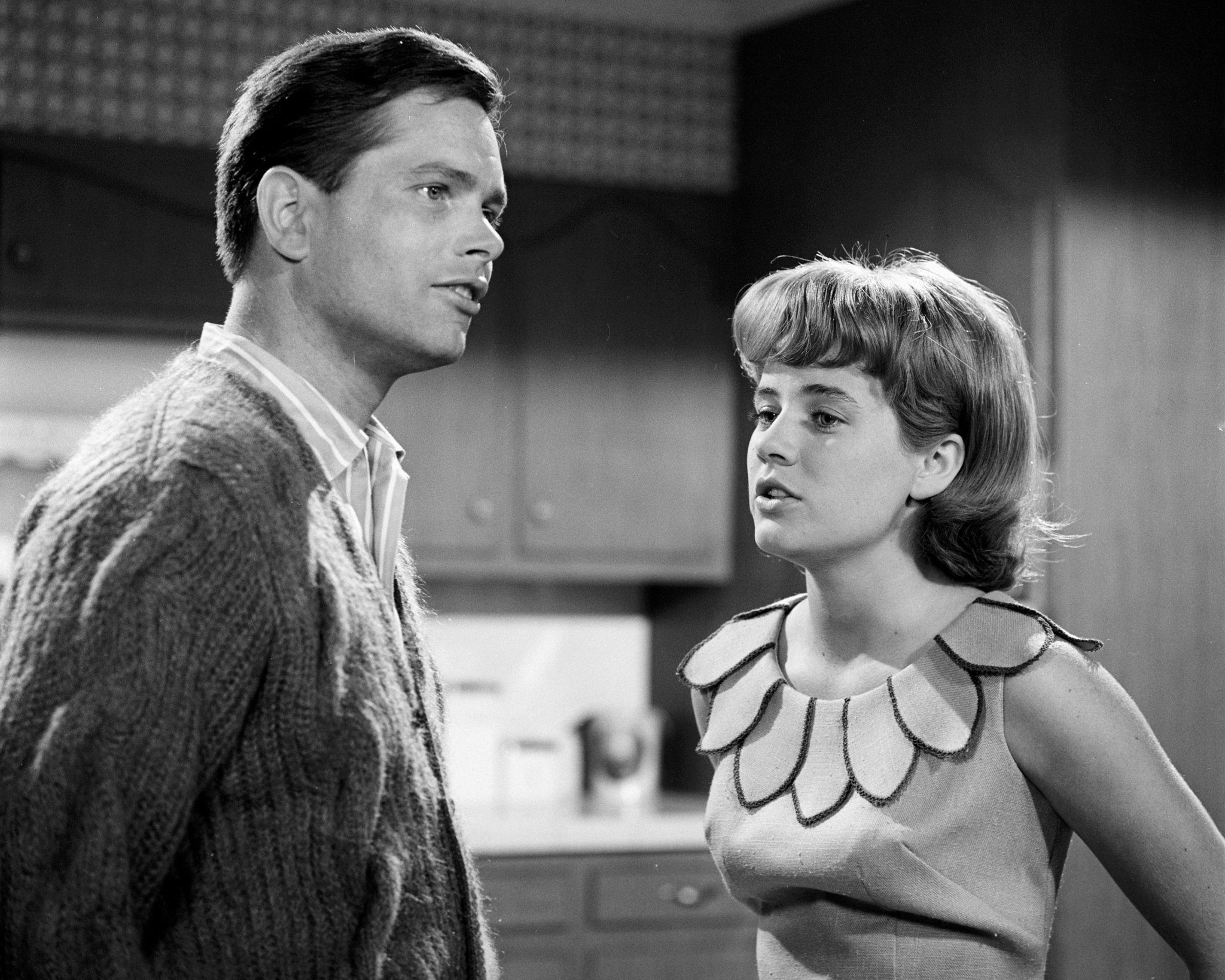
Last but not least, Eddie Applegate joined the cast Richard Harrison, Patty’s adorable, duntz of a “steady” throughout the entire run of the show.
Applegate made his screen debut in 1956. Like the rest of the cast, he worked steadily during those early years, appearing largely in the anthology TV of the era. He made his feature film debut in 1963 with an appearance in A Ticklish Affairstarring Shirley Jones and Gig Young. It was at the same time the young actor appeared as Hugo Peabody in a touring company of the musical Bye Bye Birdie, where — according to his 2016 obituary in the Honolulu Star-Advertiser, he was discovered by the producers of The Patty Duke Show.
Applegate’s filmography only shows a handful more credits after The Patty Duke Show came to a close. He appeared largely on television until 1971 when his acting career fades until the 1999 reunion movie. There isn’t much written about Applegate during this period, with webpages reporting that he was involved in painting, and in the arts scene. The ABC reunion in 1999 brought Applegate back into the industry with a handful of small roles. The most well-known appearance comes in the well-loved teen movie Easy A as “Micah’s Grandfather”.
Applegate passed away in 2016 at the age of 81.
“A Hot Dog Makes Her Lose Control”
As the 1950s turned into the 1960s, societal views of teenagers began to subtly shift and The Patty Duke Show is very much at the forefront of that. The show brings a largely positive view of the age group, not only by putting them at the forefront of the action but largely by viewing the action through their perspective.
So much of the previous era’s entertainment focused on teenagers as the “other.” They are primarily viewed through the perspective of adults. It is the grown’-ups who defined how the “kids” were seen. In sitcoms past, like The Donna Reed Show and Father Knows Best, the children are always supporting characters, viewed and analyzed by the adults.
At the same time, the 1950s also saw films like Rebel Without a Cause, The Blackboard Jungle and many more casting a cloud of suspicion over the demographic. They were seen as confusing, wild and above all, juvenile delinquents.
While Patty and Cathy did get into their fair share of trouble– there was a greater emphasis on normalcy as we entered the 1960s. They weren’t committing crimes. Usually, they were just testing out the boundaries of adulthood.
Take for example when Cathy comes on the wrong side of Uncle Martin by writing a firey, anonymous op-ed to his newspaper. Usually, though, it is Patty who gets a little too rambunctious and ends up causing her fair share of trouble.
“Did She Really Get Pinned?”
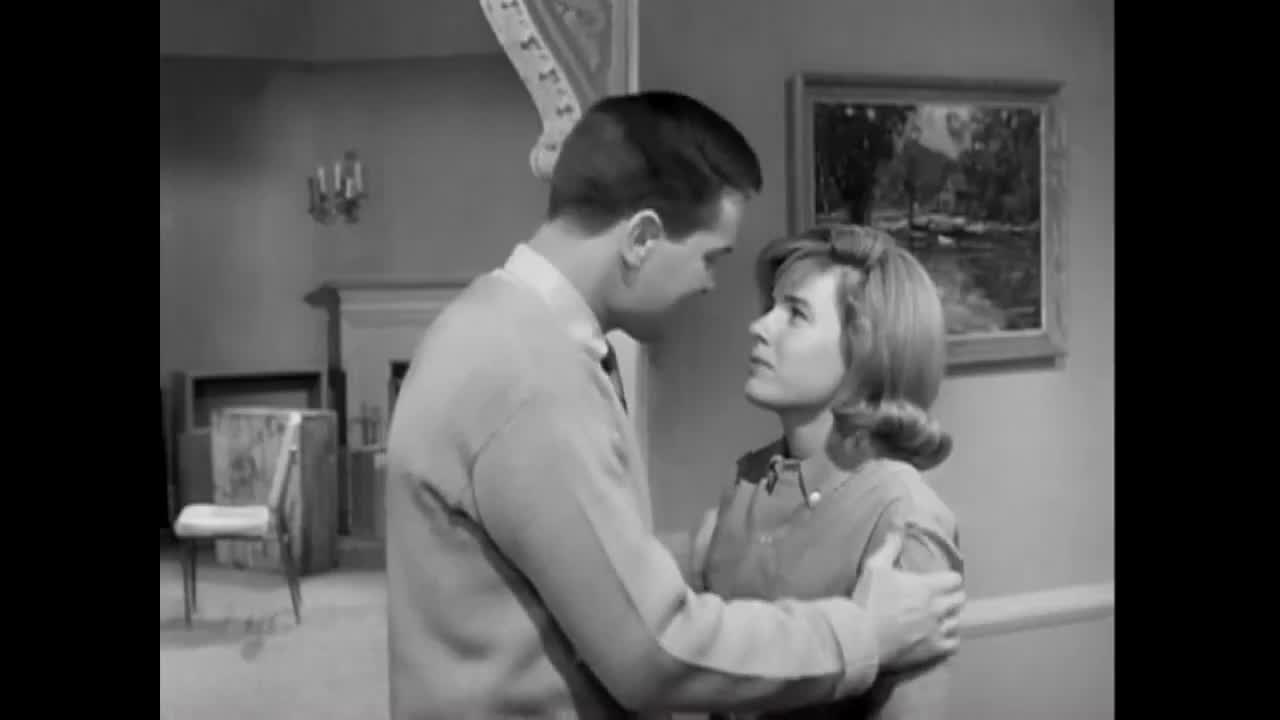
At the same time though, the show wasn’t afraid to occasionally explore some heavier themes. In one particular example, Richard and Patty decide to get married in the season three episode “Fiancé for a Day”.
This narrative in particular was something a certain group of teenagers could easily identify with. Getting “pinned” and “going steady” were the road to marriage at a time when marriage ages were lower and more took the plunge, especially in the early half of the decade.
Coming in 1963 and ending in 1966, The Patty Duke Show straddles two distinct cultural eras of the 1960s. This is seen in something as simple as the guest stars. Frankie Avalon– who guest starred in the third season premiere– represents the early, pre-Beatle part of the 1960s. Meanwhile, mod singing duo Chad and Jeremy guested in season two episode twenty-three, showing just where culture was progressing post-British Invasion.
The construction of the series’ relationships, particularly the teenage pairings, is deeply indicative of early 1960s culture. Throughout the middle of the twentieth century, the average age at marriage dropped steadily in the United States. An article dated the 7th of August 1957 in The Dispatch out of Moline Iowa writes,
Census figures show that a teenage girl has just as good a chance of getting married as girls over twenty… More than half a million teen girls marry every year and more are marrying at 18 and 19 than every other age…
Questions of sex have, and continue to be important ones in teenage culture as individuals are coming to terms with not only who they are, but who they want to connect with. It doesn’t matter the decade, it remains true today.
Of course, it must be stated, the presence of sex in The Patty Duke Show is highly sanitized, especially when watching through a 2025 perspective. Interestingly, despite being a couple for the run of the show, Patty and Richard do not kiss on camera until the third season premiere.
Meanwhile, there is a slightly more unspoken question of Duke’s age gap with Eddie Applegate. This is, admittedly a far bigger question in 2025 than 1963. In fact, the topic is ignored in the media of the period. Duke is reported to have been born in December of 1946, while Applegate was born in October 1935, giving them a roughly 11-year age difference. He was a grown man pushing thirty while he was playing a 17-year-old who was dating an actual 16-year-old.
There’s alot of discussion in period sources about “Going Steady”. Anyone who has watched Bye Bye Birdie is already familiar with the concept of getting pinned.
The Patty Duke Show tackles these subjects head-on through Patty and Richard’s perspectives. In Season One, Episode 22, Richard gives Patty his ring. Period sources of the era describe “pinning” as a college ritual where a boy gives his fraternity pin to his girl as a “next step” in their relationship. The act signified more commitment than going steady, but it wasn’t quite engagement.
Predictably, Martin and Natalie both openly worry that their daughter is becoming too singularly focused on one boy and that Patty is moving too fast.
I find the crafting of Richard and Patty’s relationship incredibly interesting throughout– and not simply in this episode. Their bond shows the painful push and pull on young teenagers during this era. There’s a desirability towards settling down in a relationship. Marriage was what you “do”. With all that though, the show allowed a more realistic view of teenagers in that it showed them as– and allowed them to be– teenagers.
This portrayal of teenagers is rooted in a more grounded depiction than was shown prior. We spend more time with Patty and Cathy. We follow them through their lives. They go to school and on dates. They’re boy-crazy and go to the soda shop. They’re just kids.
It’s Hard Out There for a Parent

At no point does the series ever seem to be looking down on teenagers or negatively judging them. Sure, there are times when Martin and Natalie don’t get the new generation, but Schallert in particular shares such a beautiful chemistry with Duke. This translates into a sweet and understanding father-daughter relationship on-screen. Martin Lane is parenting goals.
That being said, the series — particularly in season three– crafts Natalie and Martin in a way that feels more realistic from a contemporary perspective. The camera occasionally lingers on the sometimes exasperated parents and their facade is allowed to drop. Sometimes parents don’t always like their children and they just want to be alone. These moments were decidedly rare in the family sitcoms in this era, so it is refreshing to see Byron and Schallert able to explore the humanity of these characters. How many times did you see Ward Cleaver from Leave it to Beaver or Jim Anderson in Father Knows Best really let their guards down? It’s rare.
When All Is Said and Done
The Patty Duke Show is an absolute delight, especially for fans of 1960s sitcoms. It is light and fun in depicting middle-class teenagers during an era when popular culture began to acknowledge their purchasing power. Even in 2025 as women are still fighting for representation, it’s amazing to see Patty Duke killing it at a very young age, not only toplining the show but defining the narrative.
The show largely flows smoothly through the three seasons, never particularly feeling like a slog. This is largely due, I would say to Patty Duke’s performance. Her varied and in-depth portrayal of Patty and Cathy keeps the stories feeling fresh in capturing these two bright and distinct voices. It is tremendously rare, even today to see a young woman helming a show on a major network, primetime line-up. And to see it happening in such a fun, easy way in The Patty Duke Showmakes it an absolute pleasure to watch.
Fans of the era’s culture would enjoy a watch — or a rewatch– of this show. I had fun with the series’ multiple cameos across the three seasons. I’ve already mentioned Frankie Avalon. Other guest stars included: Robert Q Lewis, Charles Nelson Reilly, Troy Donahue, David Doyle, Margaret Hamilton, and Phyllis Coates to name just a few. The Patty Duke Show is a fun “whose who” of television history and yours truly ate it up.
I often see The Patty Duke Show reduced or mocked in popular culture. There’s usually alot of giggling about the theme song. I mean sure, identical cousins is… a stretch. Then there’s always a lot of snickering around “A hot dog makes her “lose control.” I get it. I do. However, in this show, Patty Duke’s rich and likable portrayal of a teenage girl came at a time when a woman top lining a major show was rare.
Much of the show’s narrative importance rests squarely on Duke’s young shoulders and while she went through more than any child should have to experience, she was always a tenacious force. This was true not just on-screen, but in her personal life as well. We didn’t deserve Patty Duke and she deserves our respect.
The Patty Duke Show is available on Roku and also on DVD for those interested in checking it out.

Leave a comment