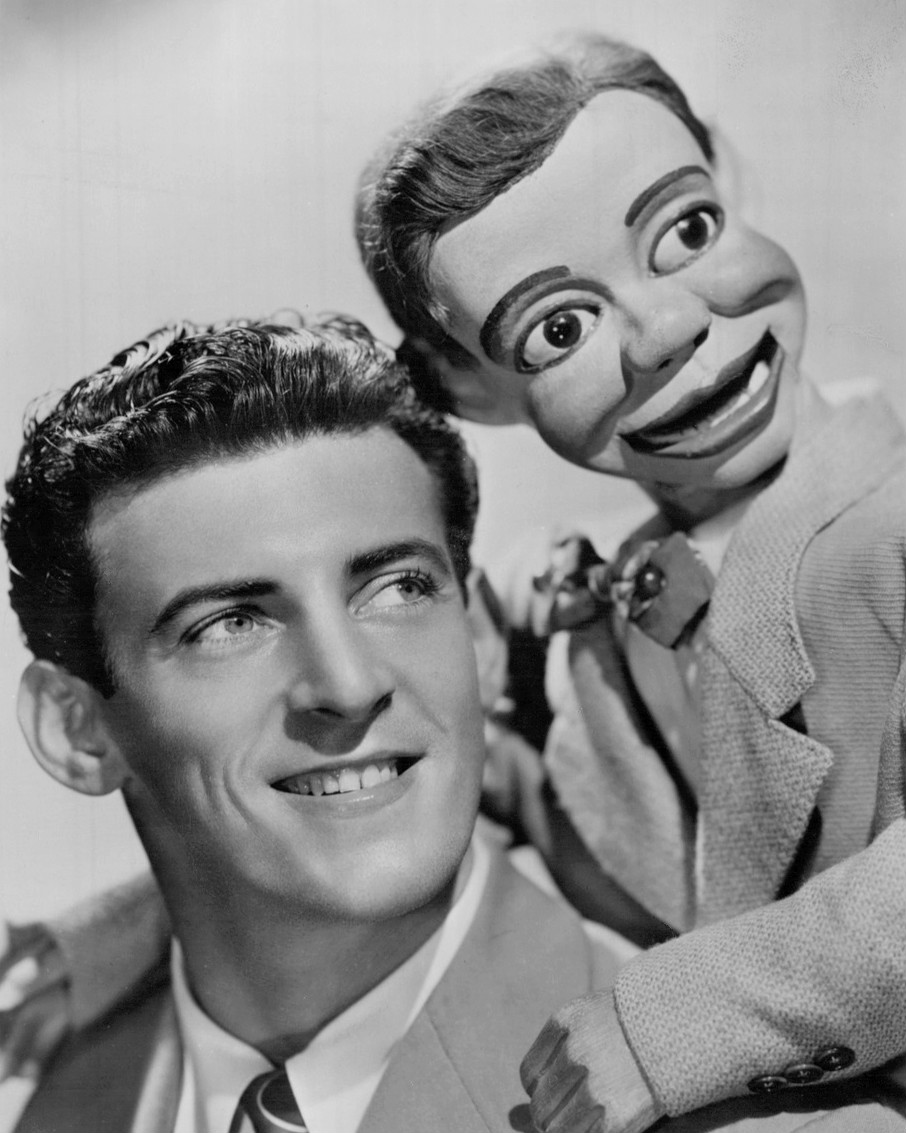
This series came to life as an outlet to talk about my acting and music fixations. I’m shameless when I fangirl. And really, that’s still true. We’re just jumping a lot further back in time.
Full disclosure… I’m a sucker for mid-twentieth century ventriloquism. I feel obligated to admit this, because, yes… there will be ventriloquist dummies today. That can be triggering for some. Prepare yourselves.
However, those who won’t get nightmares from our little uncanny valley buddies, read on and join me in the Fangirl Wayback Machine.
It’s comfy and quirky in here. Perhaps even a little weird. I mean, just watch this clip.
When I say that I’m a fan of 1960s ventriloquism, I’m pretty sure it’s thanks to the collection of delightfulness.
This clip, titled “Paul and Jerry At Home” is a mainstay on YouTube by this point. It was posted 14 years ago. That, my friends, is staying power.
The page doesn’t give too many details which makes learning the history of all of this more than a little tricky. The clip is identified as coming from “The Paul Winchell Show.” The series ran between 1950 and either 1954 or 1956 depending on the source you reference.
Paul Winchell (and Jerry, for that matter) was a mainstay on television beginning in an era when television series’ were poorly preserved. So many series from this era survive as little more than rough kinescopes— if they exist at all.
This segment shows Winchell working with a level of freedom and abstraction that feels drastically different from the other ventriloquists of the time, most of whom were often relegated to the variety show stage. It’s typically a static art form, built for the stage. Not so, this time around. Winchell crafts the skit perfectly for the TV audience.
We watch Paul and Jerry. at home. We’re supposed to believe and Winchell and Jerry were…. I suppose, father and son? Edgar Bergen maintained a very similar relationship with his character Charlie McCarthy.
This is, of course, a complex clip in ways that only early television can give us. We have the “Sugartime” music number, which contemporary writing on the show equate examples of intense product placement. It also shows moments of cultural insensitivity that are increasingly recognizable and uncomfortable here in 2025.
As a time capsule though, so much exists here that I find fascinating. We must start with one thing.
The hands.
Granted it’s a bit “uncanny valley”, kinda but Winchell brings a humanization to Jerry’s presentation that I’ve never seen with other ventriloquists during this time. They’re all supposed to feel real. However, there’s another level here. Another freaky level.
As mentioned, we see ventriloquists often on variety shows. Heck, Edgar Bergen made this entire career on the radio. Ventriloquists perform with their character on or near them, speaking for the audience. They’re performing. Not existing.
Winchell brings the art form to television in a memorable way. It gives the skits life, movement and quite often a Twilight Zone level of strangeness that makes me wish I could see behind the scenes. The intricacies to capture some of this in a single take must have been crazy.
Paul Winchell is perhaps best known for another reason in culture…
While television and ventriloquism defined his early career, Winchell’s work reached a new audience when he began voicing Tigger (of Winnie the Pooh fame) in 1968.
Winchell voiced other characters throughout his more than fifty year career, namely Gargamel in The Smurfs. It is Tigger though, who he’s chiefly known for. Those of us who identify as Millennials came of age with Winchell’s Tigger. His last credit in the role came in 2005, the same year as his passing at the age of 82.
It barely needs to be said that the squeaky clean facade of 1950s TV left little room for humanity. In truth, Winchell was a man of intense complexities. It would call for a far more lengthy and in-depth profile to do justice him as a man. His struggles. His insecurities. Heck, there’s even a little matter of his inventions. Winchell is credited with patenting early artificial heart technology.
When all is said and done though, mid-twentieth century ventriloquism delights me in all its weird and wonderful uncanniness and it is Paul Winchell who I credit for that. I may have listened to Bergen and McCarthy first, but Winchell captivated and intrigued me. There’s so much more that can be said and I hope to continue to be able to do it.
Stay tuned.

Leave a comment